
Our blog and news page is your space to stay connected with everything happening at Skin You Will Love. Here, we’ll share the latest updates about us, keep you in the loop with skincare and industry news, and bring you exclusive offers you won’t want to miss.
It’s also where we share inspiration, tips, advice, and stories designed to help you feel confident in your skin and empowered in your self-care journey. Whether it’s learning about new treatments, exploring product spotlights, or discovering ways to glow from the inside out, you’ll always find something fresh and uplifting. Because at SYWL, we believe knowledge and inspiration are just as important as great skincare.
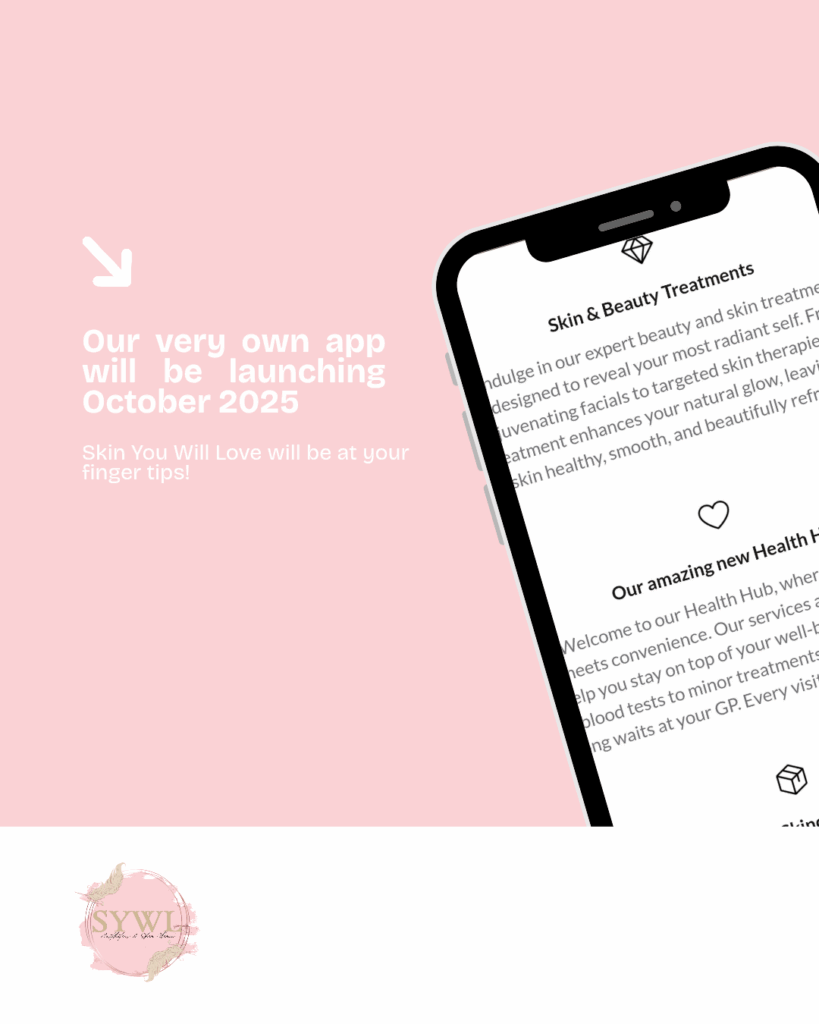
September 2025 – We’re so excited to announce the launch of the Skin You Will Love app this October! Designed to bring our award-winning skincare and services right to your fingertips, the app makes looking after your skin easier than ever.
With just a tap, you’ll be able to:
Shop our specially formulated skincare range
Book and manage appointments with ease
Access exclusive offers and loyalty rewards
Get skincare tips, advice, and updates first
Our app is all about making self-care simple, accessible, and personal because your best skin deserves the best support.
Stay tuned for the official release and be the first to download when we launch in October 2025!
September 2025 – What Happens to your Skin as you get older
Aging is a natural process that touches every part of the body, but few areas reveal it as visibly as the skin. Our skin is the body’s largest organ and its first line of defense against the outside world. Over time, it undergoes gradual yet noticeable changes due to both internal and external factors. While these changes are normal, understanding them can help you take better care of your skin and maintain a healthy, glowing appearance at every stage of life.
Below we’ll explore what happens to your skin as you get older, why these changes occur, and what you can do to support your skin as it matures.
The Natural Aging Process of Skin
From birth, your skin is constantly regenerating. Young skin is typically plump, smooth, and elastic because it produces abundant collagen and elastin—the proteins responsible for structure and firmness. However, as the years pass, the rate of cell turnover slows down, and collagen and elastin production decline.
This natural aging process is called intrinsic aging. It is determined largely by genetics and biological factors. Everyone experiences it, though the speed and intensity may differ.
Alongside intrinsic aging, there is extrinsic aging, which is caused by lifestyle and environmental influences. Sun exposure, smoking, diet, alcohol, stress, and pollution can all accelerate the aging process and deepen its effects on the skin.
Together, intrinsic and extrinsic aging explain why two people of the same age can look dramatically different in terms of skin health.
Changes You’ll Notice in Your 30s
Your 30s are often the first decade when you begin to notice subtle signs of aging. While many people still enjoy youthful, vibrant skin, this is the stage when cell renewal begins to slow.
Fine lines: You may start to see faint lines forming around your eyes and mouth, especially if you smile or frown a lot. These are often referred to as “expression lines.”
Uneven skin tone: Pigmentation from sun exposure earlier in life may begin to surface.
Dullness: As cell turnover slows, dead skin cells can build up, leaving skin less radiant.
Early loss of elasticity: Some may notice their skin isn’t quite as firm or plump as it was in their 20s.
Taking preventative steps in your 30s—like using sunscreen daily and investing in hydrating, antioxidant-rich skincare—can make a huge difference long term.
What Happens in Your 40s
In your 40s, the signs of aging become more visible. This is a transitional decade when hormonal changes may also play a role.
Deeper wrinkles: Fine lines may develop into more permanent wrinkles, particularly around the eyes (crow’s feet) and forehead.
Thinner skin: Collagen and elastin continue to decline, which can make skin thinner and more fragile.
Dryness: Oil production decreases, making skin drier and more prone to flaking.
Pigmentation: Sun spots, age spots, and uneven skin tone become more pronounced.
Loss of volume: Fat pads under the skin begin to shrink, particularly in the cheeks and around the eyes, creating a more hollow appearance.
For women, perimenopause and menopause often begin in this decade, bringing fluctuations in estrogen that directly affect skin hydration and elasticity.
Your Skin in Your 50s and Beyond
By the time you reach your 50s, aging skin changes are typically much more noticeable. This decade often marks a significant turning point due to hormonal shifts, slower healing, and cumulative environmental damage.
Sagging: With reduced collagen, elastin, and fat support, skin may sag around the jawline, cheeks, and neck.
Deeper folds: Nasolabial folds (the lines running from the nose to the corners of the mouth) and marionette lines (from the mouth to the chin) become more defined.
Rougher texture: Skin may feel less smooth due to slower regeneration.
Bruising and sensitivity: Thinner skin means blood vessels are more fragile, leading to easier bruising.
Loss of glow: Reduced circulation makes skin appear duller.
From your 60s onward, these changes typically progress, but they don’t have to dictate how your skin looks or feels. With the right care, many people maintain healthy, vibrant skin well into later life.
Why These Changes Happen
To fully understand what’s happening, it helps to look at the biological processes behind skin aging:
1. Collagen and Elastin Decline: Collagen gives skin its structure, while elastin provides flexibility. After your 20s, collagen production decreases by about 1% per year, leading to thinner, less resilient skin.
2. Slower Cell Turnover: Young skin renews itself every 28 days. With age, this process can stretch to 40–60 days, leaving skin looking dull and uneven.
3. Reduced Oil Production: Sebaceous glands slow down, leading to dryness and sometimes itchiness.
4. Decreased Blood Flow: With age, circulation slows, meaning fewer nutrients and oxygen reach the skin’s surface.
5. Hormonal Shifts: Estrogen, in particular, plays a big role in skin health. Reduced estrogen after menopause leads to dryness, thinning, and decreased elasticity.
6. Cumulative Sun Damage: Ultraviolet (UV) radiation accelerates collagen breakdown and contributes to pigmentation issues, rough texture, and even skin cancers.
How to Care for Aging Skin
While you can’t stop aging, you can absolutely influence how your skin looks and feels as you grow older. Here are some effective ways to support your skin:
Sunscreen every day: UV exposure is the number one external factor in skin aging. Daily SPF is essential.
Moisturise regularly: Hydration helps reduce dryness and improve elasticity. Look for moisturisers with hyaluronic acid, ceramides, or glycerin.
Antioxidants: Vitamin C, E, and other antioxidants help protect skin from free radical damage.
Retinoids: Retinol and prescription-strength retinoids can increase cell turnover and stimulate collagen production.
Gentle cleansing: Harsh cleansers strip oils and irritate skin. Opt for mild, hydrating cleansers.
Healthy diet: A diet rich in fruits, vegetables, lean proteins, and healthy fats supports skin from within.
Hydration: Drinking enough water helps maintain elasticity and plumpness.
Professional treatments: Chemical peels, microdermabrasion, microneedling, and laser therapies can improve texture and stimulate collagen.
Sleep and stress management: Both poor sleep and high stress contribute to inflammation and faster skin aging.
Book Treatments with Us here at Skin You Will Love, we help you embrace your skin at every stage and help you feel your very best. We know Skin!